Mold removal in Titusville, FL
Mold inspection, testing and removal. One call connects you with a licensed local pro.
Pros taking calls Mon–Fri, 9am–6pm(321) 555-0142- 1Attic, after roof leaks
- 2AC air handler and ducts
- 3Window sills and frames
- 4Bathroom walls and grout
- 5Baseboards, slab leaks
- Licensed Florida mold pros
- Free to call, no obligation
- Mon–Fri, 9am–6pm
- Titusville and nearby towns
Signs you need mold remediation
Mold grows inside walls, under flooring and in air handlers long before it shows on a surface. These signs usually mean it's time to call.
- A musty, earthy smell
Stronger when the AC runs or after rain. A smell with no visible mold often means growth inside a wall or duct.
- Spots, stains or fuzz
Black, green, grey or white patches on drywall, ceilings, grout or baseboards, or yellow-brown water stains.
- A recent leak, flood or storm
Anything that stayed wet for more than a day or two after a roof leak, plumbing failure or storm surge.
- Allergy-like symptoms at home
Sneezing, a stuffy nose, itchy eyes or worse asthma that eases when you leave the house.
- Peeling paint or warped surfaces
Bubbling paint, soft drywall, cupped flooring or swollen baseboards point to trapped moisture.
- Condensation that won't go away
Wet windows, sweating AC vents or damp closets mean indoor humidity is high enough for mold.
Why mold is common in Titusville homes
Titusville sits on the Indian River Lagoon in north Brevard County, and the air stays humid most of the year. Mold needs moisture, something to feed on and warmth. Florida homes supply all three.
- Hurricanes and tropical storms drive rain under shingles, through windows and into walls.
- Air conditioning problems such as clogged condensate lines, dirty coils, or an oversized unit that cools without drying the air.
- Slab-on-grade homes, where slow plumbing leaks soak baseboards and drywall before anyone notices.
- Homes closed up for the season with the AC off or set high, letting humidity build for weeks.
- Roof leaks that wet attic insulation and roof decking out of sight.
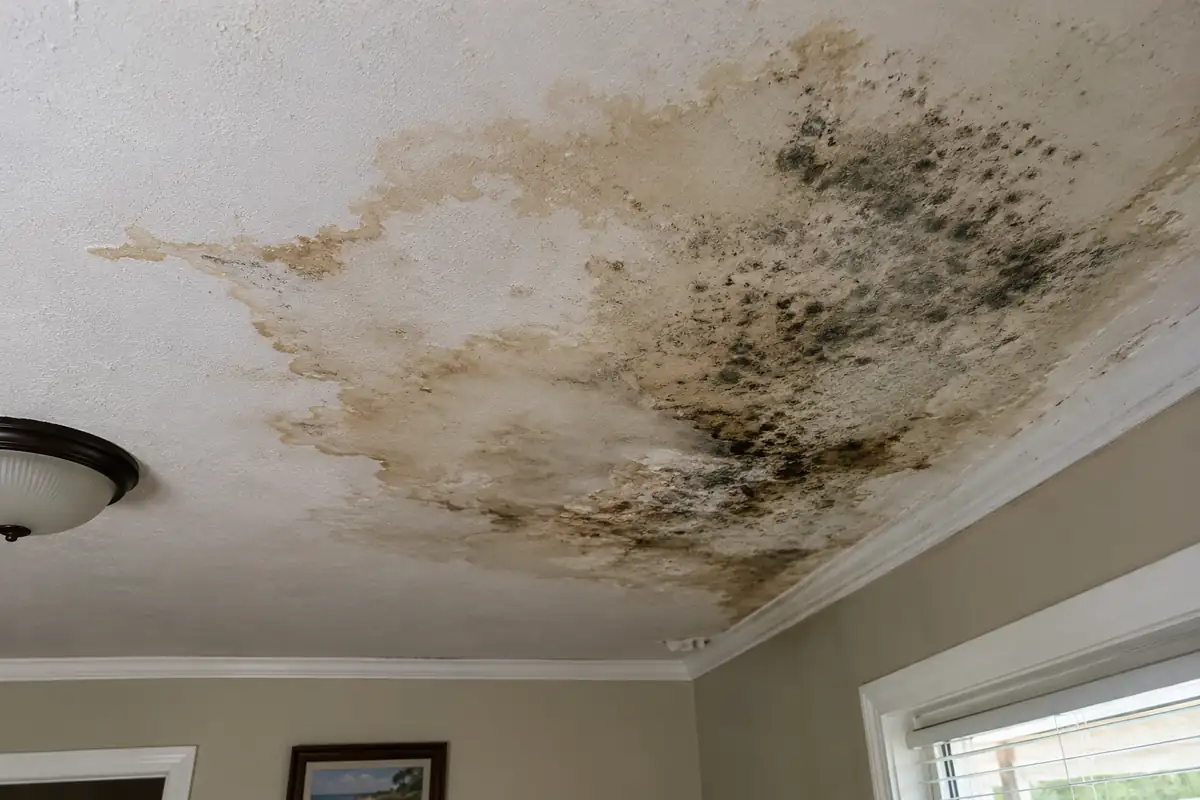
That's how quickly mold can start growing on wet drywall, wood or carpet. In Titusville's humidity, drying out fast after a leak or storm matters more than anything else.
Mold services in Titusville
Every job starts by finding the moisture. If that isn't fixed, mold comes back no matter how well it's cleaned.
Mold inspection
A visual inspection with moisture meters and thermal imaging to find hidden growth and the water feeding it. The right first step when you smell mold but can't see it.
About mold inspectionMold testing
Air and surface samples analyzed by a lab, plus clearance tests after the work.
About mold testingBlack mold removal
Contained removal of Stachybotrys and other dark molds from drywall, wood and insulation.
About black moldMold after water damage
Drying and mold prevention after leaks, floods and storms.
About water damage moldAttic mold removal
Treatment of mold on roof decking and rafters after leaks or poor ventilation.
HVAC and air duct mold
Cleaning air handlers, coils, drain pans and ducts that spread spores.
Commercial mold remediation
Offices, rentals, condos and HOAs, scheduled to limit downtime.
How mold remediation works
Professional remediation follows the same order on every job, whether it's one closet or a whole house.
- Inspect and map moisture
Check visible growth, measure moisture in walls and floors, find the water source.
- Stop the water
Fix the leak, drain line or humidity problem first, or the mold returns.
- Contain the area
Plastic sheeting and negative air pressure keep spores from spreading.
- Filter the air
HEPA air scrubbers capture spores released during the work.
- Remove damaged materials
Moldy drywall, insulation, carpet pad and baseboards are cut out and bagged.
- Clean and treat
Framing and hard surfaces are HEPA-vacuumed, wiped and treated.
- Dry the structure
Dehumidifiers and air movers bring moisture back to normal.
- Confirm and rebuild
Clearance testing confirms the area is clean before walls go back in.
Common types of mold in Florida homes
You don't need to know the species to act. Any mold growing indoors should be removed and its moisture fixed.
- StachybotrysBlack mold
- Dark green to black and slimy. Grows on drywall, paper and wood that stay wet for a long time.
- AspergillusVery common indoors
- Many colors. Found on walls, insulation and in HVAC systems; a concern for weak immune systems.
- PenicilliumBlue-green, fuzzy
- Spreads fast on water-damaged materials, carpet and furniture, often with a strong musty smell.
- CladosporiumOlive to brown
- Grows on fabrics, wood, window frames and AC vents, even in cooler parts of the home.
Florida mold rules in plain words
Florida is one of the few states that licenses mold work, and the rules protect you as a homeowner.
Ask any company for its Florida mold license number before work starts.
State law defines mold assessment and remediation as work on areas over 10 square feet, and that work must be done by licensed professionals.
A licensed mold assessor generally can't remediate a home they assessed in the past 12 months. That keeps testing honest.
What affects the cost
No honest company can price a mold job over the phone. The full extent usually shows up only during inspection.
- Size of the affected area and how many rooms it reaches
- Containment level and how long air filtration runs
- Drywall, insulation, flooring or cabinets to remove
- Whether mold reached the AC system or ducts
- Drying time, especially after flooding
- Testing before and after, usually billed by the assessor
Will insurance pay?
Sometimes. Florida policies tend to separate sudden damage from slow damage.
- Mold from a sudden, covered event, such as a burst supply line, is more likely to be covered.
- Mold from a slow leak, ongoing humidity or maintenance problems is often excluded.
- Many policies cap mold coverage at a fixed amount.
- Take photos, keep damaged materials for the adjuster, and report the claim quickly.
Areas we serve
Homes and businesses across Titusville and the nearby communities of north Brevard and south Volusia.
- Mims 32754
- Port St. John 32927
- Scottsmoor 32775
- Oak Hill 32759
- Cocoa 32922
- Merritt Island 32952
Mold removal questions from Titusville homeowners
Do I need mold testing before remediation?
Not always. If you can see the mold and know where the moisture came from, remediation can start without testing. Testing helps when you smell mold but can't find it, when someone in the home has health symptoms, or when you need proof for a sale, a landlord or an insurer. Testing after the work, called clearance testing, confirms the job is done.
How long does mold remediation take?
A small, contained area such as one bathroom wall often takes one to three days. Larger jobs that involve several rooms, an attic or the air conditioning system can take a week or more, mostly because materials must be removed and the structure has to dry fully before anything is rebuilt.
Can I stay in my home during mold remediation?
Usually yes, when the work area is sealed off with plastic and kept under negative air pressure. People with asthma, allergies or weak immune systems, and babies, are often safer staying elsewhere for the duration of a large job.
Can I clean mold myself?
Small patches on hard surfaces, roughly under 10 square feet, can often be cleaned by a homeowner with gloves, an N95 mask and good ventilation. Mold on drywall, insulation or carpet, mold that keeps coming back, or anything larger should be handled by a professional, because disturbing it spreads spores through the house.
Is black mold dangerous?
Black mold, usually Stachybotrys chartarum, can irritate the eyes, nose, throat and lungs, and it is a bigger concern for people with asthma or weak immune systems. Any mold growing indoors should be removed and its moisture source fixed, whatever its color.
Does homeowners insurance cover mold in Florida?
It depends on the cause and your policy. Mold from a sudden covered event, such as a burst pipe, is more likely to be covered. Mold from a slow leak, long-term humidity or deferred maintenance is often excluded, and many Florida policies cap mold coverage at a set amount. Check your policy and call your insurer early.
How soon does mold grow after water damage?
Mold can start growing on wet materials within 24 to 48 hours. In Titusville's humid climate, drying out quickly after a leak, flood or storm is the single best way to prevent a mold problem.
How do I keep mold from coming back?
Fix the moisture source, keep indoor humidity below about 50 to 60 percent, run the air conditioning and bathroom fans, keep AC drain lines clear, and dry any leak within a day or two. Mold comes back when the moisture that caused it is still there.
Found mold? Don't wait for it to spread.
One call connects you with a licensed mold remediation professional serving Titusville.